



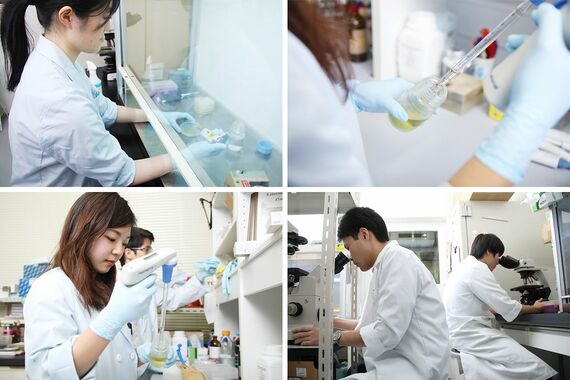
Sophia University is proud of its international diversity, and its Faculty of Science and Technology is among the faculties at Japanese universities that have most proactively instituted frameworks to promote the progress of globalism . In recent years, these efforts have been paying off in a highly visible fashion, such as with a series of students earning high acclaim at international conferences.
“English for Science and Technology” to compete on a global stage
Professor Tetsuhiro Tsukiji, Dean of the Faculty of Science and Technology, says that English education has made enormous contributions to the Faculty of Science and Technology’s outstanding track record.
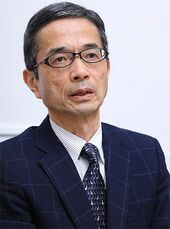
Dean of the Faculty of Science and Technology, Sophia University
“In our faculty, apart from English as a language subject, we have also developed a curriculum where scientific English is taught systematically from the second year. The goal is for students to master specialized terms and expressions in the science and technology field and build discussion and presentation skills, and the English proficiency cultivated through this program is being put to use on the world stage with tremendous results.”
The Green Science program in the Department of Materials and Life Sciences and the Green Engineering program in the Department of Engineering and Applied Sciences, in which all lectures, experiments and research guidance are conducted in English and credits can be earned in English, also symbolize the internationalization of the Faculty. Possibly as a result of these programs, the number of international students in Faculty of Science and Technology has steadily increased from 76 in 2012 to 112 in 2017 years, from 14 to 51 in the graduate school. These students are highly diverse, hailing from 23 different countries.
Also, we have seen improvements in research outcomes, including an increase in the number of scientific research grants from the Ministry of Education, Culture, Sports, Science and Technology and the Japan Society for the Promotion of Science awarded for joint research with companies and organizations. The Faculty of Science and Technology is currently focusing on further accelerating the dissemination of research contents and outcomes outside the university, with a view to cooperation among industry, government, and academia.
“When a faculty member or student receives an award at an academic conference, we immediately post it on our website and/or Facebook, and create press releases on distinctive and intriguing research. We gain publicity by disseminating them through the Economy, Trade and Industry Press Club and Education Ministry Science Press Club.” (Dean Tsukiji)
These publicity measures have gained results such as in November, when research by Department of Materials and Life Sciences Professor Masahiro Rikukawa et al. and technology research association FC-Cubic was covered in the Nikkan Kogyo Shimbun, an industrial and economic newspaper. The technology they developed leads to higher efficiency and output for fuel cells, and there are already calls for its full-scale application to fuel cell vehicles.
Sophia University provides support for patent applications and cooperation among industry, government, and academia
Sophia University is committed to supporting career development for female researchers and female students. Although people typically picture undergraduate faculties of science and engineering as being full of male students, in the Sophia University Faculty of Science and Technology, approximately half the students in the Department of Materials and Life Sciences are female. We have many female researchers who are highly active and accomplished.
Among them is Professor Tamao Saito, who teaches in the Department of Materials and Life Sciences. Her office conducts research on chemical substances made by microorganisms living in the soil, and on microorganisms’ communication through these chemical substances. Professor Saito discovered that cellular slime molds living in the soil secrete substances that repel crop-ravaging insects. She is carrying out collaborative research with chemical manufacturer Panefri Industrial Co., Ltd. with the aim of developing crop protectants that curtail pests using this repellent substance.
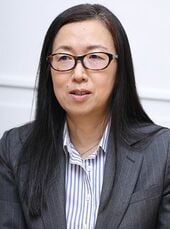
Department of Materials and Life Sciences
Sophia University Faculty of Science and Technology
This research is now moving steadily forward, but Professor Saito says, “It is thanks to support from the Center for Research Promotion and Support that I am able to engage in this joint research.” The Center supports the research activities of teachers and students, and aims to apply research results widely in the world, including through cooperation among industry, government and academia.
“When I spoke about this research with the coordinator at the Center, I was invited to participate in a presentation of new technologies at the Japan Science and Technology Agency. After I presented the findings at this briefing session, several companies showed interest, and the outcome was this joint research with Panefri Industrial.” (Professor Saito)
Regarding patent applications, she says that staff in charge of patents at the Center offer comprehensive support such as checking points regarding the application in detail.
“I had been engaged in basic research for a long time, and I did not know much about cooperation among industry, government, and academia. There are many professors who are totally absorbed in their research and do not know how to appeal to potential sources of support and cooperation outside the university, and in my case it is no exaggeration to say that the Center put me where I am today.” (Professor Saito)
Cultivating the next generation of researchers
At comprehensive private universities, faculties of science and technology are often located on separate campuses, but Sophia University has nine faculties including the Faculty of Science and Technology all located at the Yotsuya Campus. The close communication and ease of access to various resources unique to a compact but comprehensive university are effective in promoting research.
“It is precisely because of our small size that the staff at the Center for Research Promotion and Support has a firm grasp of what each professor is working on and is able to share information very efficiently. Also, because of the physical and mental proximity to professors in other departments, we have frequent opportunities to obtain their opinions about our research. I am very happy that when I want to get a colleague’s ideas about something, I can just go downstairs and ask.” (Professor Saito)
Currently, Professor Saito’s immediate goal is the commercial application of her collaborative research, but at the same time, she regards cultivating the next generation of researchers as a long-term mission. One leader among this new generation belonging to Professor Saito’s office is postdoctoral fellow, Takaaki Narita. Narita studied at Dundee University in the UK for two and a half years after obtaining his Ph.D. at Sophia University, and came back to Professor Saito’s office this July.
In recent years in Japan, there has been a rapid increase in the number of people unable to find employment at a company or a position at a laboratory despite earning a doctorate, and it is developing into a social issue. Normally, postdoctoral fellows at university are hired by laboratories, but there are a limited number of laboratories with the funding to hire them or with personnel vacancies, making it difficult to secure a position.
“Sophia University has a system to recruit postdoctoral fellows under the age of 35 who earned their doctorates at Sophia. Naturally there are a limited number of positions and there is a screening process, but in my case, it was thanks to this system that I was able to return from overseas and pursue a career in Japan. Looking ahead, I would like to continue building on my experience abroad to pursue original research.” (Narita)
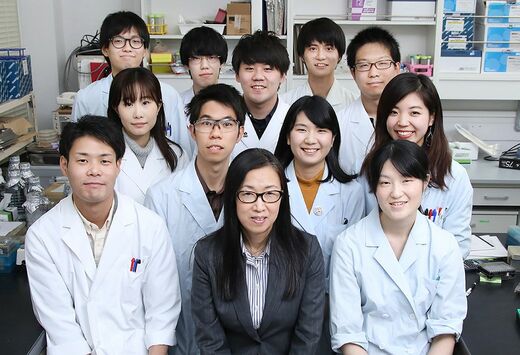
One member says, “I have heard there are many large laboratories at national universities, but at Sophia University the laboratories have a small number of members. It is great to have the professor and my seniors in the doctoral and master’s programs so close at hand, and when I hit a stumbling block with my research I can easily consult them.” (Keisuke Yokoyama, undergraduate fourth year)
Members of Professor Saito’s office include students from abroad. Sanjaya Alvin, an international student from Djakarta, Indonesia, says “One reason I chose Sophia University is its fantastic location in the middle of Tokyo.” Sanjaya completed the undergraduate English course a year ago through the early graduation system, and is now in the second year of the master’s program and is scheduled to participate in a major academic conference next year. Here in Japan, he is progressing steadily towards his dream of becoming a molecular biology researcher.
While taking advantage of its strengths as a compact but comprehensive university, Sophia University creates an environment where both teachers and students can immerse themselves in research. Here in Yotsuya, Tokyo, we aim to foster a new generation of researchers with global perspectives who will have a significant positive impact on our world.


