

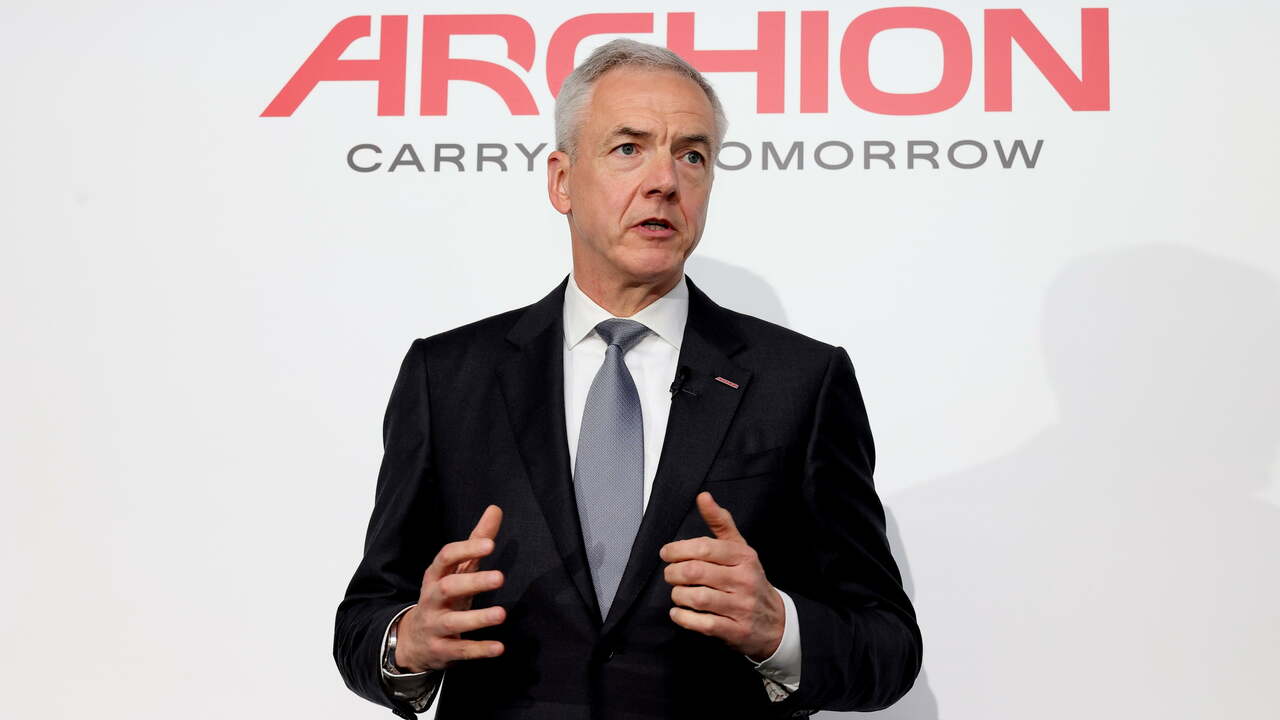
"We are a Japanese champion with a truly global presence."
remarked Karl Deppen, CEO of ARCHION (hereinafter "Archion") on May 15, during a press conference announcing the company's mid-term business plan through fiscal year 2032.
Archion is a holding company established through the management integration of Hino Motors and Mitsubishi Fuso Truck and Bus. While the integration was initially aimed for within 2024, negotiations dragged on, partly but significantly due to Hino's engine certification scandal. Ultimately, Hino and Fuso structured the deal to establish a holding company while continuing to operate as separate business entities.
Archion went public this April—coinciding with the start of Japan's new fiscal year—to mark the beginning of its new voyage. As a result, the formerly listed Hino was delisted from the stock exchange and, together with Fuso, became a subsidiary of the Archion Group.
The target figures outlined in the mid-term business plan are ambitious: by fiscal year 2032, the company aims for revenue of approximately 2.8 trillion yen, an operating profit margin exceeding 10%, and global new vehicle sales of around 280,000 units (an increase of about 30% from FY2025). Domestically, the goal is to recover sales volume and boost their combined domestic market share to over 50% (currently around 42% combined). In Southeast Asian markets, they also plan to increase new vehicle sales by approximately 30%.
One of the key points in the mid-term business plan was "integrated platform strategy." By FY2032, they plan to manufacture over 85% of their global sales volume on integrated platforms. The two operating companies will jointly procure components — including powertrains, chassis, and electronics — to cut material costs. They also plan to halve their domestic factory footprint, reducing from six plants to three.
One reason Archion could set such forward-looking goals was that Hino, one of its main subsidiaries, managed to get back on track after the prolonged turmoil of its engine certification issues. Hino’s FY2025 financial results—its last as a listed company—indicated that it has finally shaken off the heavy burden of the engine certification issues that had long plagued it. For the first time since the scandal came to light domestically in FY2021 (and in North America in FY2020), both operating profit and net income returned to profitability.
The cost incurred by Hino to address the domestic certification misconduct was approximately ¥4.18 billion in FY2025, a massive drop from the peak of ¥90.79 billion in FY2022. Deppen explained that the shipping delays for domestic light-duty trucks caused by this issue will essentially be resolved from this fiscal year onward.
Integration Lagging Behind the Competitor
However, it is hard to say that a clear roadmap was presented to achieve these mid-term targets.
"Listening to this press conference, I felt disappointed. The goals look impressive, but there are almost no concrete measures." "I doubt whether they can beat Chinese manufacturers or Isuzu with this"—such skepticism was voiced by reporters attending the press conference.
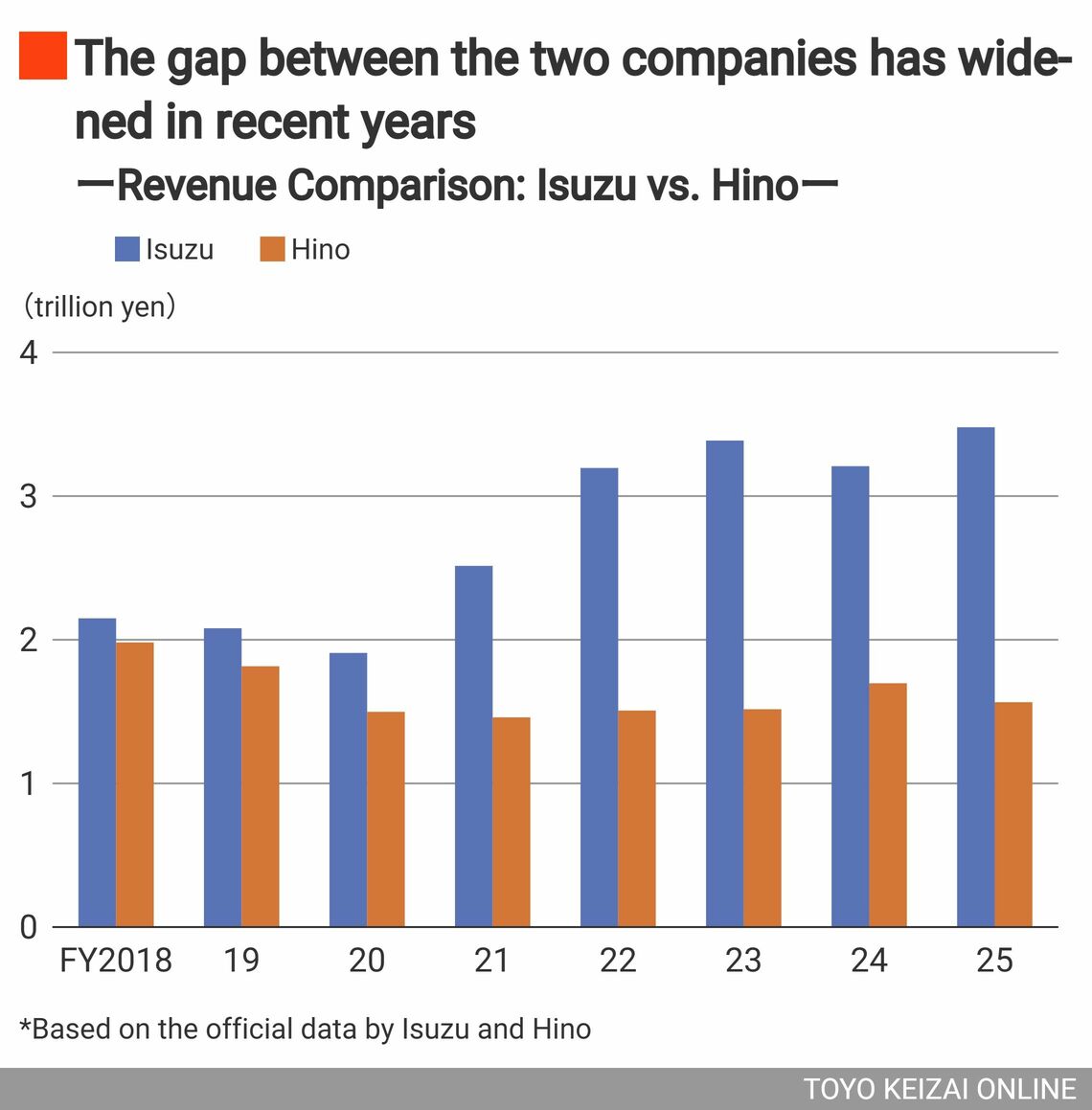
Contrary to Archion's enthusiasm to reclaim market share, the performance gap between it and its rival, Isuzu Motors, has been widening drastically in recent years. In FY2018, the revenue difference between Isuzu and Hino was just 1.1 times. However, in FY2021—when Isuzu made major commercial vehicle manufacturer UD Trucks a wholly-owned subsidiary—the gap widened to 1.72 times. It expanded even further following Hino's engine certification scandal, reaching 2.2 times in FY2025.
The gap can be found not only in business performance but also in the "speed" of integration.
On May 13, Isuzu announced that it is considering a full absorption merger of its wholly-owned subsidiary UD within FY2027. Besides the integration of their sales networks announced last year, "we aim to eliminate redundant operations in areas like back-office functions," according to an Isuzu source.
At the same time, both the Isuzu and UD brands will be retained, leveraging the brand recognition each has built up in specific regions and product segments. Regarding the "common platform" with UD championed by Isuzu, the division of roles seems already clear-cut: tractor heads are being jointly developed by Isuzu and UD, while heavy-duty trucks are handled by UD, and light-to-medium-duty trucks by Isuzu.
"Even after making UD a wholly-owned subsidiary, improving operational efficiency had not been easy. It will likely be even harder for Archion, which has two major shareholders," the same source noted. Archion's major shareholders include Daimler (holding 44.25% of voting rights) and Toyota (holding 37.45%). Both hold more than the 33.4% stake required to unilaterally veto special resolutions at shareholder meetings (such as mergers, business transfers, or amendments to the articles of incorporation) in Japan’s Companies Act.
Changing Market Environment
In fact, there are many ambiguities regarding Arhion’s "integrated platform strategy" emphasized at the press conference. It has already been announced that light-duty electric trucks will be supplied on an OEM basis from Fuso to Hino, and medium-duty models from Hino to Fuso. However, concrete plans regarding procurement and development have yet to be disclosed.
According to an Archion source, this strategy goes beyond mere reciprocal OEM supply; it aims to eventually standardize certain elements across all areas, including R&D, procurement, production, and logistics. The company has already launched initiatives like "R&D Co-working group" in order to facilitate discussions while involving frontline employees. "By sharing development resources and technological foundations, we want to streamline testing costs," the same said in May. On the other hand, they admitted that "Only about two months have passed since the integration, so frontline workers aren't fully onboard everywhere yet. Specific policies are still to come."
Regarding autonomous driving, Isuzu aims to launch Level 4 autonomous vehicle commercial services in FY2027, whereas Archion has yet to announce a specific timeline.
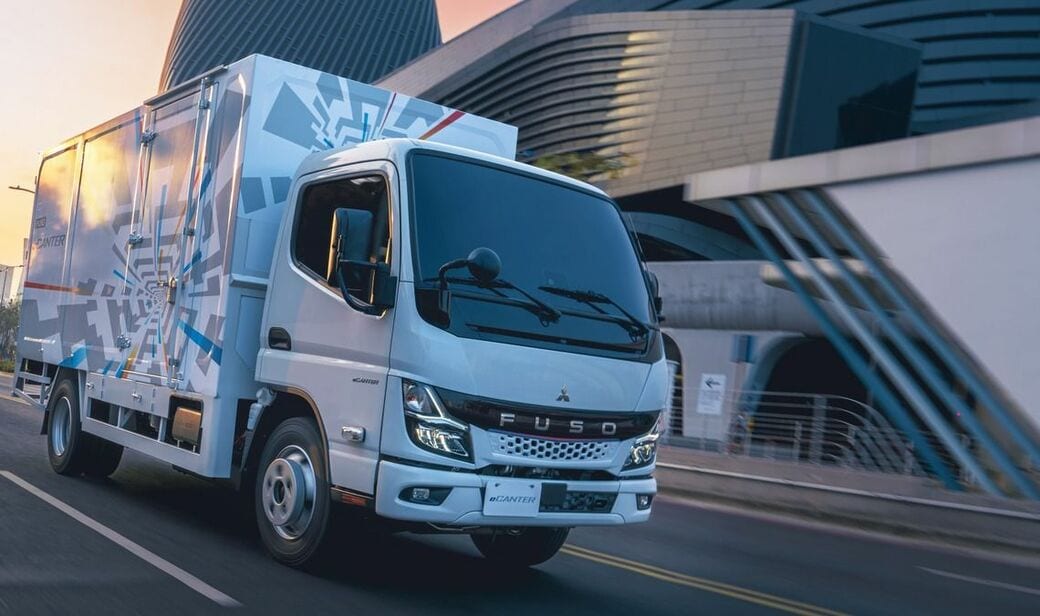
On the electrification front, Fuso’s light-duty EV truck, the "eCanter," occupies a leading position in the domestic EV truck market. However, competitors, particularly Chinese auto-makers, are looming large. Though less prominent than in the passenger car market, Chinese EV manufacturers are rising fast in the commercial vehicle sector. For instance, China's BYD is expanding rapidly, with its global commercial vehicle sales reaching 57,000 units in 2025 (a 2.6-fold increase year-on-year).
Just as in the passenger car market, it is hard to deny a risk that the commercial vehicle market in Southeast Asia—where Japanese manufacturers have traditionally held an advantageous position—could suddenly be overtaken by Chinese rivals. In Japan, BYD already holds the top market share in the EV bus market and plans to launch light-duty EV trucks this year.
Post-merger cultural integration could also be a challenge. One Fuso employee expressed concerns, saying, "Right after we came under Germany's Daimler, we struggled with communication with foreign employees. The vague, tacit understanding that works between Japanese people doesn't fly at all with foreigners. The people at Hino might face similar struggles ahead.
The domestic truck industry has undergone continuous restructuring in recent years. This latest move establishes a clear rivalry between the "Isuzu camp" (Isuzu and UD) and the "Archion camp" (Hino and Fuso). The crucial factor appears to be whether each side can generate synergies under a unified strategy within their respective groups. Faced with an Isuzu camp showing confidence in its head start, what will the Archion camp's next move be? Given the changing market environment, they do not have the luxury of taking their time to integrate the organization and create synergy.