

Just before the opening ceremony for the railway factory, another major Hitachi factory investment was announced in the U.S. on September 5. The company will invest over $1 billion to build a new transformer factory, including on land adjacent to its existing transformer facility in Virginia.
Against the backdrop of aging power infrastructure and the rapid growth of data centers for generative AI, Hitachi Energy, which handles Hitachi's power transmission and distribution business, has announced plans to invest $9 billion globally between 2020 and 2027, with factory expansions planned in Pennsylvania and elsewhere in the U.S.
Accelerating Investment in America
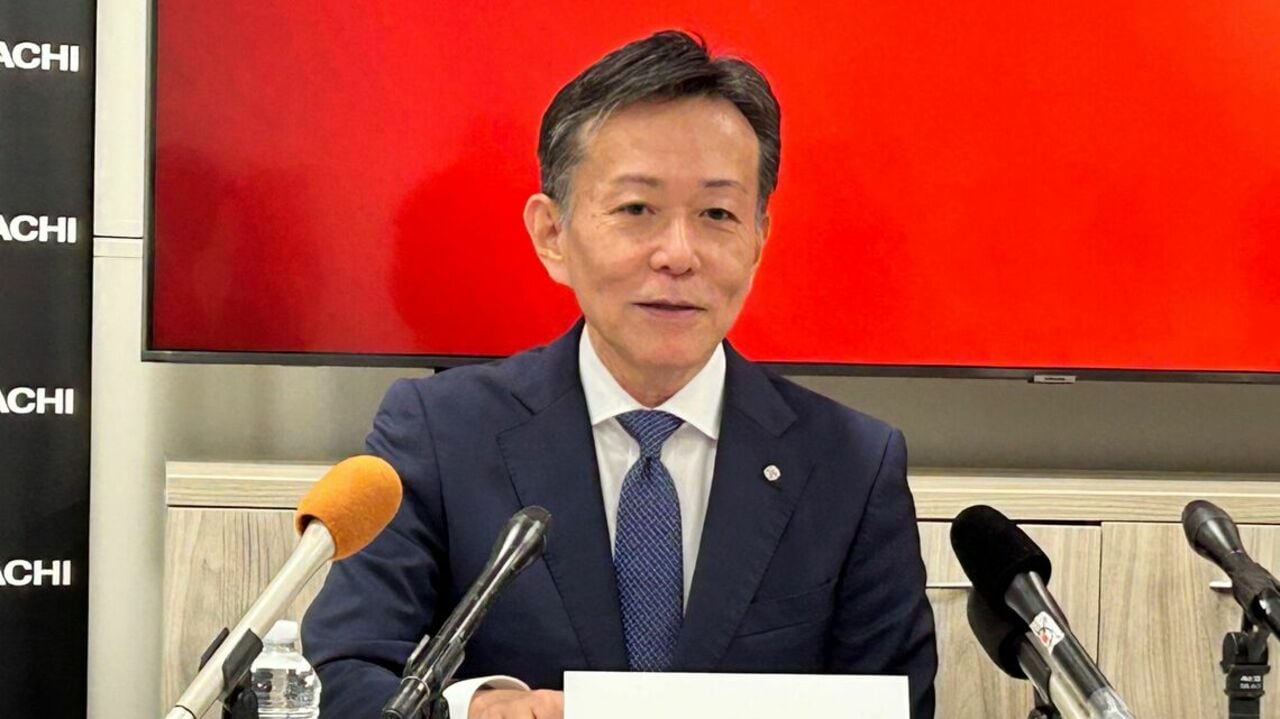
"The U.S. is currently tackling aging infrastructure, responding to rapidly growing energy demand driven by the proliferation of generative AI, and working to secure manufacturing jobs and bridge skill gaps," said Toshiaki Tokunaga, President and CEO of Hitachi, in his remarks at the opening ceremony for the railway factory.
At a subsequent press conference, he stated that the company had invested $12 billion in the U.S. over the past five years, and expressed ambition to accelerate this to "an equivalent or greater amount by around 2030."
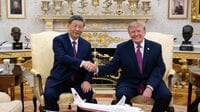
The Trump administration, which has championed a manufacturing resurgence and secured a $550 billion investment commitment from Japan, would likely welcome this warmly. Indeed, the White House reacted immediately on X after the transformer plant announcement, posting a "congratulatory" message that appeared to claim it as the administration's own achievement.
Hitachi estimates the Hagerstown plant will directly employ 460 people, generate 1,300 jobs across the wider region, and deliver $350 million in annual economic impact.
"Never mind the cutting-edge digital aspects — the fact that they built a railway factory of this scale in America is remarkable in itself," said Dan Cupper, editor of the American rail magazine Railroad History, who visited the factory. "At least in the U.S. rail industry, nobody else is investing anywhere near this much."
Why America, Why Now
The reason Hitachi is actively investing in the U.S. lies in its company-wide push for "autonomous decentralized global management."
This philosophy, introduced by Executive Chairman Toshiaki Higashihara during his tenure as president, involves each of the six regional bases — Japan, North America, Europe, and others — autonomously developing their specialized businesses while sharing common Hitachi principles and resources.
By avoiding mutual dependency, the company aims to reduce risks from conflicts or natural disasters while enabling faster decision-making.
For the new railway factory, approximately 70% of materials by value are sourced domestically under the Buy American Act. While material costs may increase, raising the local procurement ratio reduces tariff risks and mitigates the impact of supply chain disruptions, such as those seen during the pandemic.
North America is also viewed as a key growth market. Sales for the fiscal year ending March 2025 reached ¥1.528 trillion, accounting for 16% of total revenue — the third-largest market after Japan and Europe, and roughly in line with the prior year.
The standout performers were transmission and distribution, driven by robust equipment renewal demand, and DX support services led by GlobalLogic, the digital engineering company acquired for ¥1 trillion.
Strong performance in transmission and distribution is expected to continue, and the railway business is also viewed as promising, with vehicle deliveries set to begin with the Baltimore Metro in Maryland. The medium-term management plan through 2027 calls for acquiring companies that complement existing businesses. If investments reach around $12 billion by around 2030, M&A deals of significant scale would not be surprising.
The complicating factor was a business environment that had grown sharply more unpredictable under the second Trump administration.
Tariffs were only part of the story: there was also the prolonged saga over Nippon Steel's bid for U.S. Steel, and the detention and deportation of Korean engineers at Hyundai's Georgia plant — vivid reminders that political risk in America had become very real.
It was against this backdrop that Tokunaga emphasized the need for agility at the press conference. "We want to transform into an organization capable of agile action. To that end, we are also strengthening our intelligence functions — our ability to grasp market conditions and track the direction of government policy."
Joining the "Billion-Dollar Club"
At Hitachi's Washington Corporate Office, nine staff members, including registered lobbyists, handle everything from research and coordination with law firms and Japanese companies to lobbying activities — including lobbying government agencies, state governments, and federal and state legislators involved in Hitachi's business.
When the office was established in 1985, amid the start of Japan-U.S. semiconductor talks, they were on the front lines of negotiations with the Department of Commerce. But times have changed, and so has Hitachi's business structure. Today, their main activity is lobbying to ensure that bills include items relevant to Hitachi's operations, such as digital initiatives.
"We focus on states like Michigan and North Carolina, where Hitachi has many employees, and do the painstaking work of having roughly 30-minute conversations with members of the Senate and House, as well as opinion leaders," said Keiichi Shimada, Deputy General Manager of the Government & External Relations Group and head of the Washington Corporate Office. What resonates with local lawmakers, he noted, isn't factory automation — it's job creation.
Since the start of the second Trump administration, money has become even more decisive. "Companies that don't invest get no attention — even American ones. Conversely, foreign companies that do invest will get a hearing," Shimada said.
Hitachi had also struggled to access the core of the Trump administration — but the moment it announced the new transformer factory, "the inquiries came pouring in," Shimada says.
Officials like the Secretary of Commerce and the Secretary of Energy, who had previously gone silent after meetings, suddenly reached out: "If your executives are visiting, do you want to meet?" The effect of joining the billion-dollar investment club was immense.
On the other hand, risks are ever-present. With the Trump administration, you never know where the landmines are. "A single White House tweet can send stock prices swinging sharply," Shimada noted.
Keeping track of the administration's moves has never been more critical. With Japanese staff potentially coming to assist during the factory launch, the Hyundai Motor incident was not something Hitachi could dismiss as someone else's problem.
Still, Shimada's view is clear: "In the long run, the U.S. remains the country and market where growth is assured. As a government relations officer, I'm focused on contributing to Hitachi outperforming there."
The Challenges of Cracking America
However, some question whether the Trump administration's aggressive push will actually succeed in bringing manufacturing back. One challenge is the labor shortage. According to data from the U.S. Bureau of Labor Statistics, there was a shortage of approximately 500,000 workers in manufacturing as of 2024.
Not only are fewer people attracted to factory jobs, but workplaces involving AI and robotics now require workers with advanced knowledge and skills — making it far from certain that highly skilled talent will choose factories as their workplace.
"The clear direction of strengthening manufacturing presents a business opportunity for us," says Tokunaga. "We see business opportunities in how to improve efficiency and pursue automation amid the labor shortage."
Production costs are another concern. Material costs and wages are high compared to other countries. Even if domestic production eliminates tariff risk, the question remains whether it can compete with products manufactured outside the U.S.
Even autonomous decentralized management cannot fully insulate the company from a global economic slowdown. In the first quarter of the fiscal year ending March 2026 (April–June), Hitachi's North American Digital Systems & Services business, including storage, was hit by investment restraint due to tariffs, with sales falling 9% year-on-year.
For the full fiscal year, the tariff impact is projected to reduce Hitachi's adjusted EBITA (earnings before interest, taxes, and amortization) by ¥30 billion.
Around the time of the railway factory opening ceremony, an exhibition for Hitachi customers was held in Washington, and Hitachi advertisements were visible at bus stops and airports throughout the city.
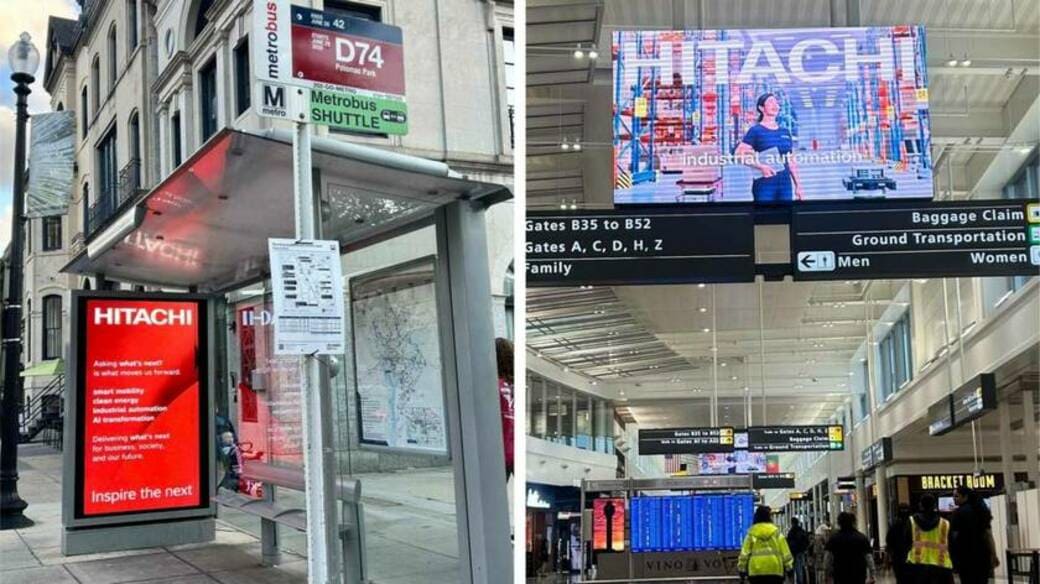
There was no sense of a "Japanese company" image whatsoever. In America, the Hitachi name still has ground to cover — but the factory is a start.
This article is part of "Hitachi's Global Ambitions," a special feature originally published in Toyo Keizai from July to November 2025. English edition prepared for The Oriental Economist.