

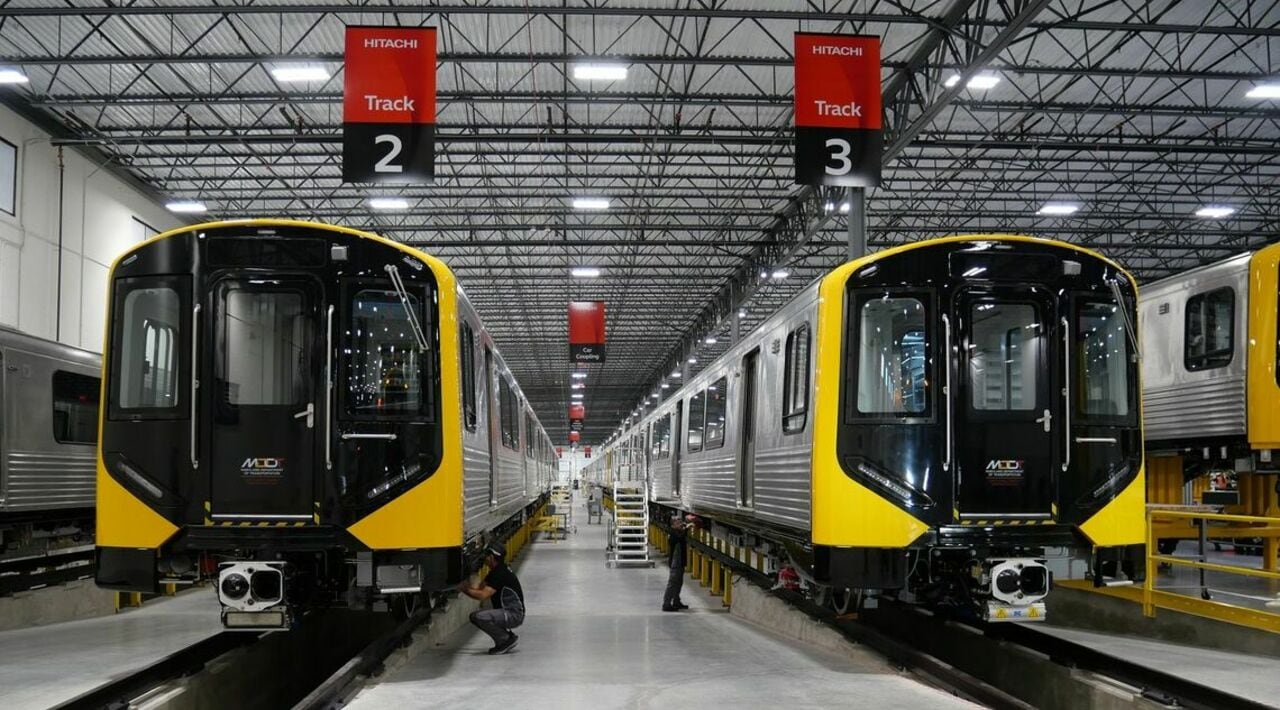
Earth, Wind & Fire's "September" filled the ceremony venue in Hagerstown, Maryland. After the congratulatory speeches, a ribbon was cut, a black curtain rose, and a new railcar was unveiled.
Hitachi has launched full-scale operations at its new railway vehicle manufacturing plant in the United States. The ceremony brought together Hitachi executives — including Executive Chairman Toshiaki Higashihara and President & CEO Toshiaki Tokunaga — alongside officials from the state government and urban transit authorities, in a decidedly festive atmosphere.
A Strategic Factory Packed with Hitachi Technology
The new plant, built in a town of approximately 43,000 people near Washington, D.C., is currently assembling railway vehicles for the Baltimore Metro in Maryland, with production of subway cars for Washington and Pennsylvania slated to follow.
Of the factory's total investment of $100 million, $30 million was allocated to digital initiatives, equipping the facility with state-of-the-art systems that leverage AI and other digital technologies.
The plant brings together technologies from across the Hitachi group: GlobalLogic, the U.S. digital engineering firm acquired for approximately ¥1 trillion in 2021; Hitachi Digital, which provides AI-driven consulting; and Hitachi Energy, which handles power transmission and distribution. It is, in every sense, a strategic factory for the Hitachi Group.
So what makes this factory different from its predecessors? Let's look at four key points.
Flexibility
Stepping inside the factory, one immediately notices the generous space. Crucially, there are no rails — a feature typically found in railway vehicle factories. This allows for flexible layout reconfiguration. On the day of our visit, only two lines were in use, contributing to the spacious feel. At peak capacity, it can be expanded to four lines, enabling production of up to 20 cars per month.
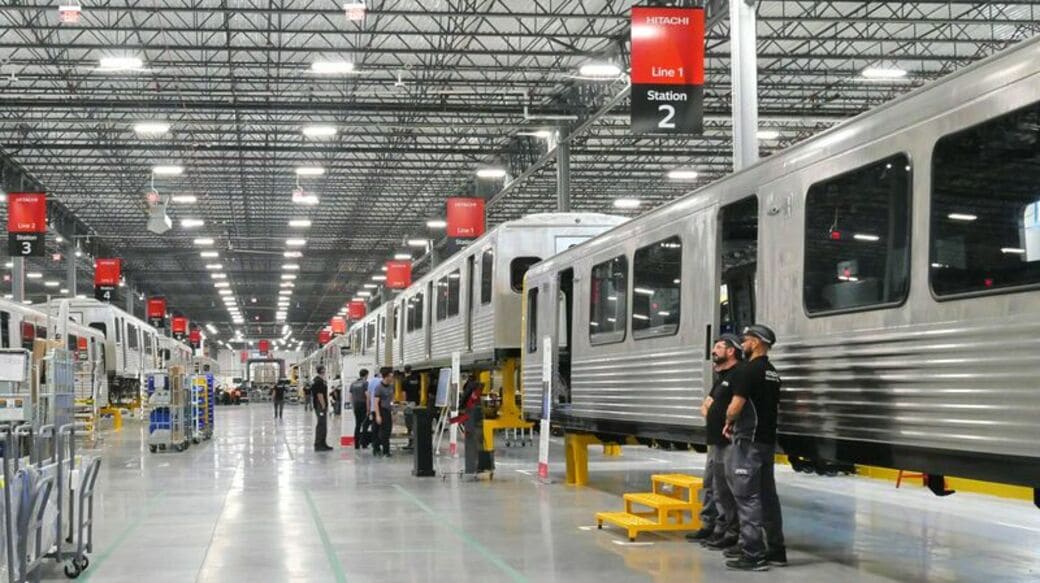
The production lines are arranged in a straight configuration. Assembly begins with the installation of cables and components in the undercarriage, then gradually progresses to exterior and interior finishing.
In factories with fixed rails, workers sometimes have to lie on their backs and slide under the car body. In the new factory, the car body is mounted at a higher elevation from the start, and gradually lowered as the process advances — reducing physical strain on workers.
After each process is completed, all car bodies are moved simultaneously to the next stage and loaded onto laser-guided automated guided vehicles. In a conventional rail-based factory, transferring a car body to another track requires a crane — eliminating that step contributes to shorter manufacturing times.
Finally, the car body is moved to a railed section of the floor for checks on lighting, door operation, and other systems. If no abnormalities are found, it proceeds to an 800-yard (approximately 730-meter) outdoor test track for a running test.
Thorough Data Management
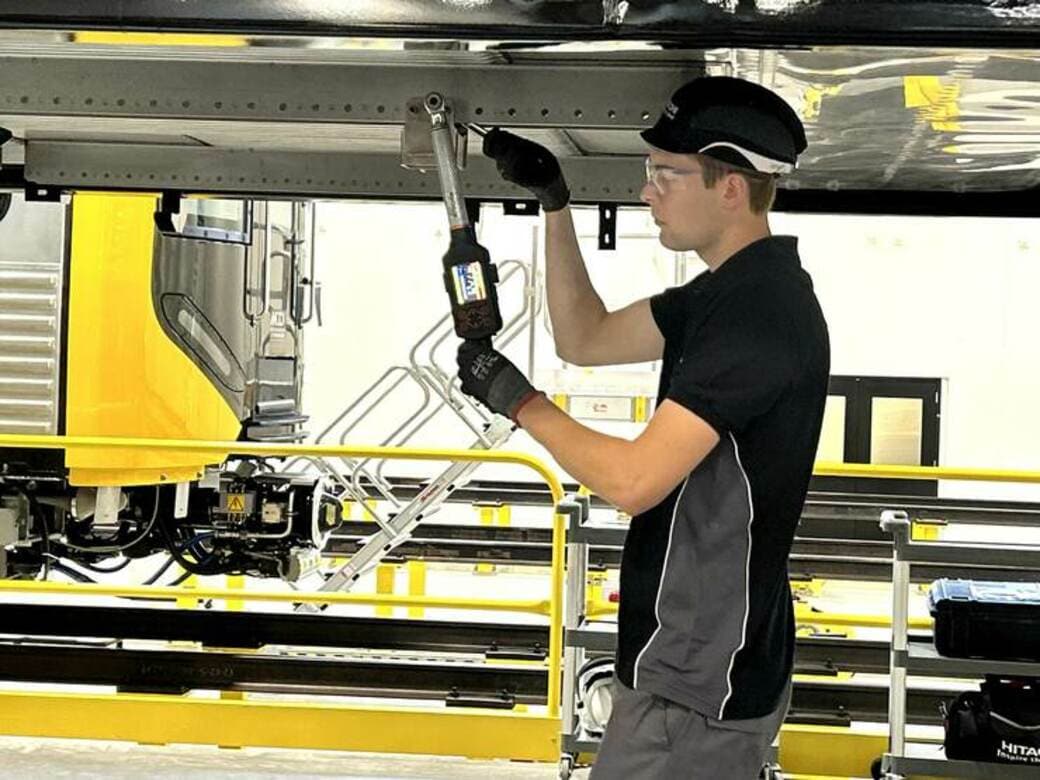
Everything is tracked by data: who performed each task, when, with which parts and equipment, and according to which manual. When assembling a vehicle, for instance, precise torque management is essential — and the new factory records exactly who tightened which bolt, and when.
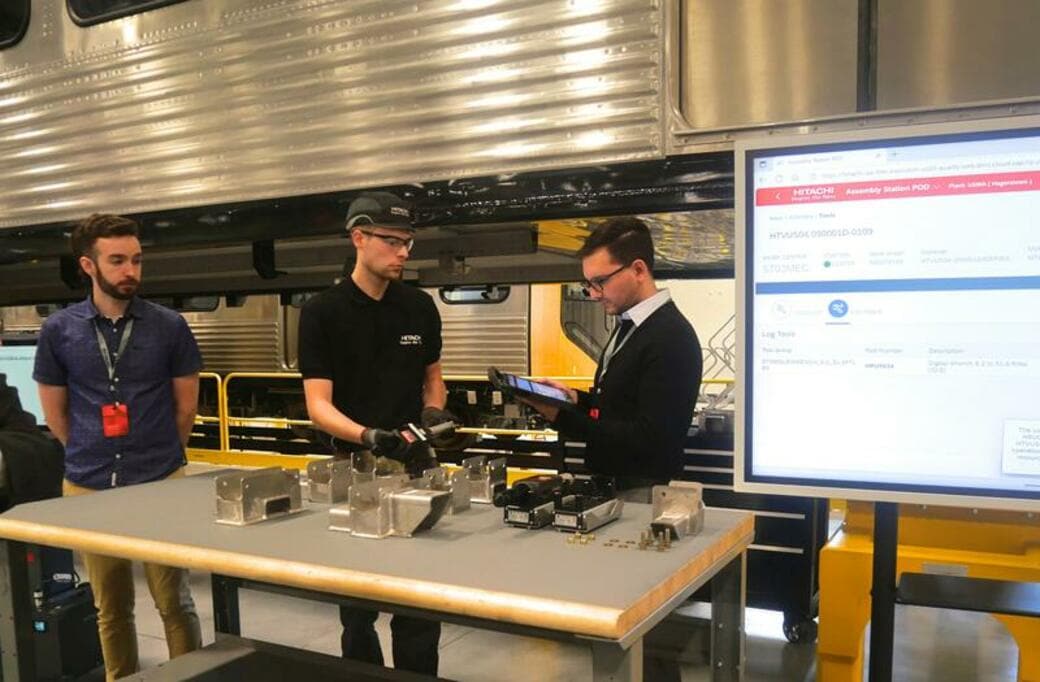
Each worker's skills and proficiency levels are also fully digitized. If a worker lacks the required skill for a given task, the necessary equipment — such as a torque wrench — will not operate. This data is accumulated and analyzed to enable more efficient staff allocation, among other applications.
Beyond digitizing parts requirements, the factory has also introduced a system that collects data on parts procurement risks and analyzes them using AI.
The system draws on a range of factors — supplier ESG data, regional terrorism and conflict risks, natural disasters, and emerging regulations — to identify potential vulnerabilities. "Risks tend to increase as you go down the subcontracting tiers," noted one person in charge.
The Wow Factor
There are also several "eye-catching" elements. The one that draws everyone's gaze is almost certainly Boston Dynamics' Spot — a quadruped robot equipped with a camera on its back.
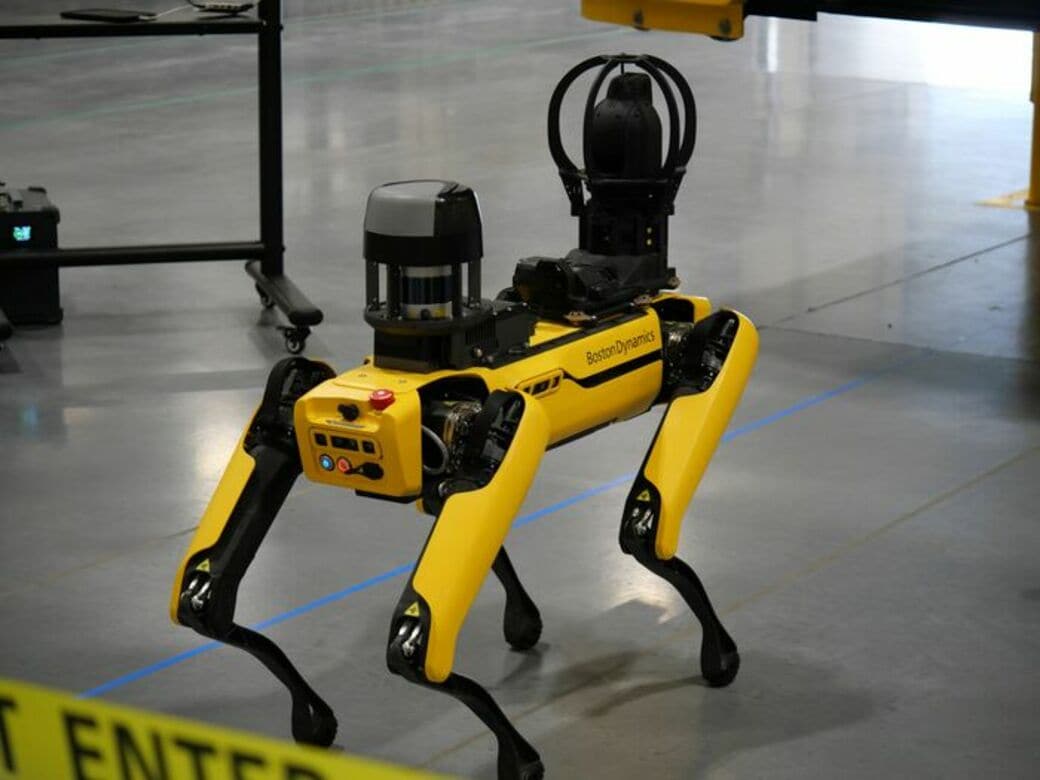
The robot moves autonomously while AI analyzes the captured image data to detect scratches and other damage on the car body. The image analysis algorithm was developed by Hitachi. Watching it repeatedly circle the vehicle during inspection demonstrations, there is something undeniably endearing about it.
Such inspections were traditionally performed by hand, but using a robot creates greater flexibility in scheduling. Spot is currently still in training, but its accuracy will improve as it accumulates data and continues learning.
The factory has also introduced a 3D printer made by Italy's Roboze to produce vehicle parts and spare components. When part specifications change, for instance, prototypes can be manufactured to facilitate communication with suppliers.
Reducing Worker Burden
Mechanisms to ensure worker safety and reduce physical strain have also been built into the factory. As mentioned, the workload under the car body has been reduced, and assistive suits are available for workers to wear.
"Sometimes we have to work looking up for 45 minutes straight," said one worker, "but wearing this prevents neck and shoulder pain."
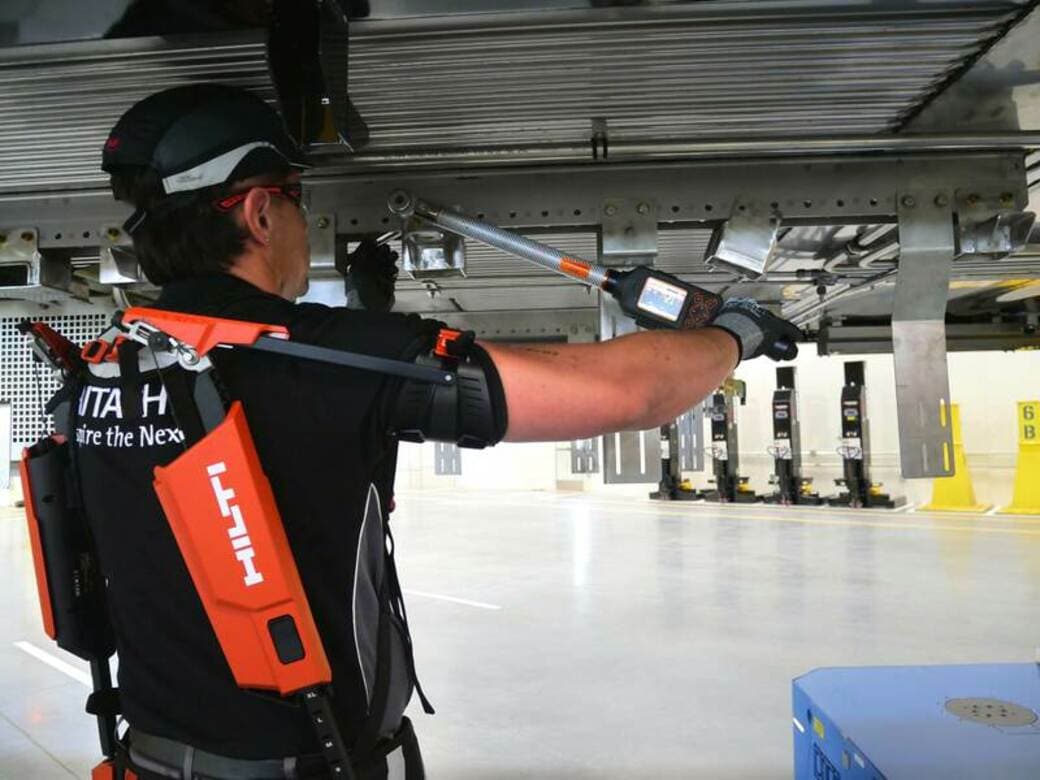
Multiple cameras and sensors are installed throughout the factory, sounding alerts if a worker is not wearing a safety helmet, is using equipment incorrectly, or adopts a posture that risks back injury when lifting heavy objects. Should an automated guided vehicle come too close to a worker, the system automatically avoids a collision.
The Factory as Showcase
Given the scale of the digital investment, replicating this factory model elsewhere is not particularly realistic. Hitachi itself positions the facility as a "showcase," and has built an experience center adjacent to the factory with customers and government officials in mind.
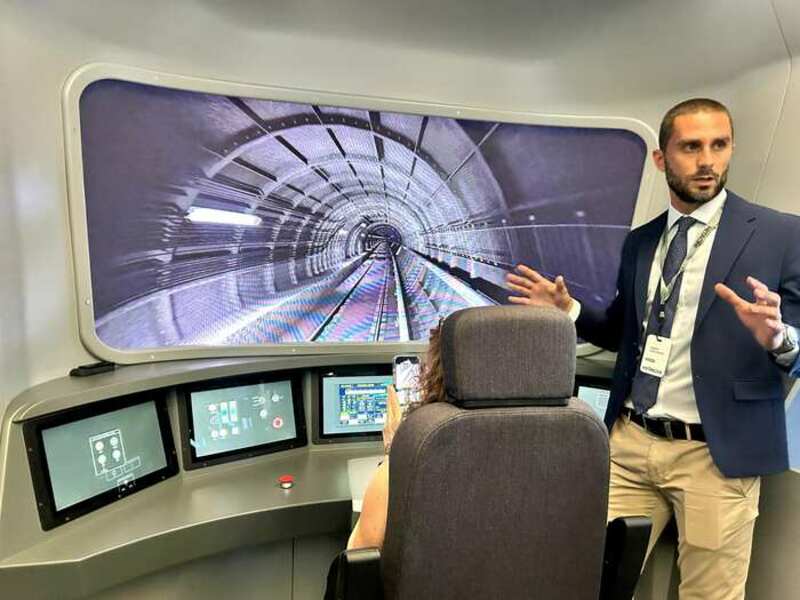
The center features a railway driving simulator and demonstrations of HMAX, Hitachi's maintenance and management solution for rolling stock and infrastructure.
The new factory incorporates technologies from across the Hitachi Group at every turn — meaning it can serve not only as a showcase for railway operators, but as a venue to demonstrate how Hitachi's technologies and services are being applied across the broader group.
Seen in that light, the location — just an hour and a half's drive from Washington, D.C. — could hardly be better placed. It is, at the very least, a compelling calling card.
This article is part of "Hitachi's Global Ambitions," a special feature originally published in Toyo Keizai from July to November 2025. English edition prepared for The Oriental Economist.