

“Honestly, these days, I cannot see much pioneering spirit in Hitachi’s organization. For example, when we develop our budget for the fiscal year, we try to set the target as low as possible, and once we overachieve the AOP, we may receive a good bonus. But this way of thinking is not sustainable."
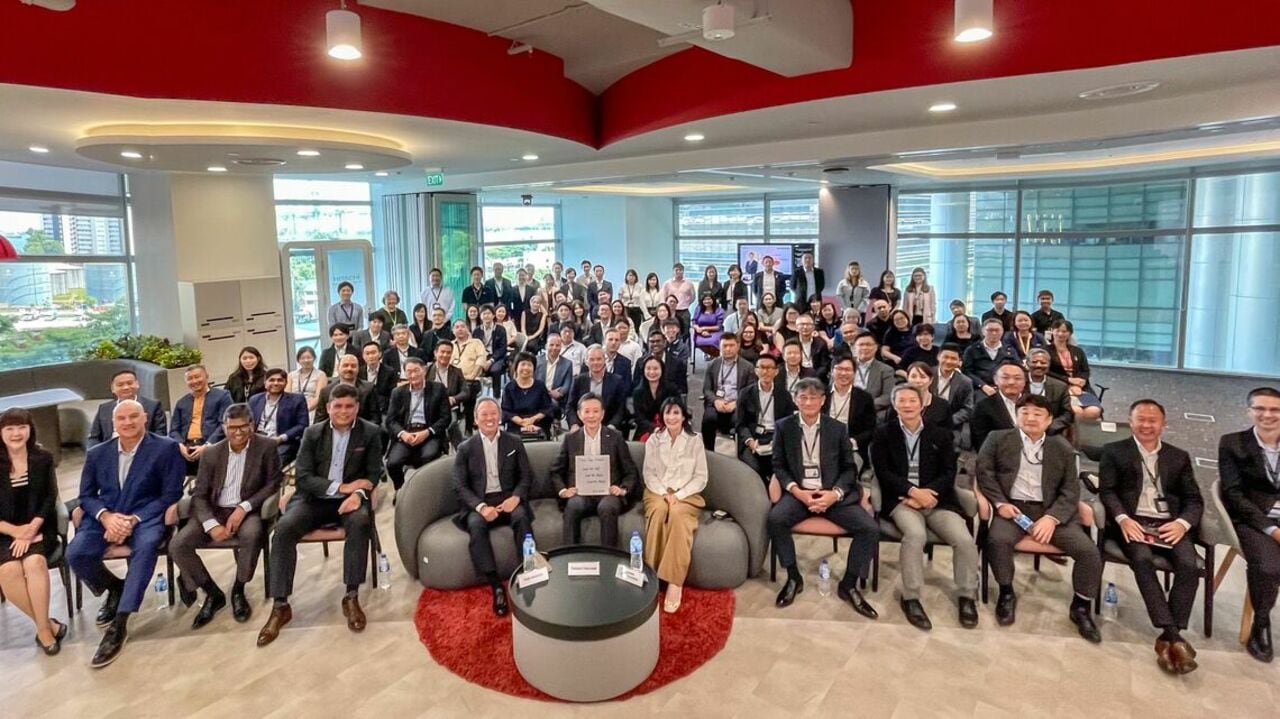
On May 12, 2025, Hitachi President Toshiaki Tokunaga made the remarks in response to a question from employees about “the importance of reclaiming the pioneering spirit of the founding era in an age of rapidly accelerating digital transformation.” The comments came at a kickoff event outlining the company’s new management plan through fiscal 2027, attended by around 360 executives from across the globe.
For Tokunaga, who became president in April, the occasion could be seen as his “debut.” Even so, he did not mince words: “I keep saying that we should reinstall our operating system.”
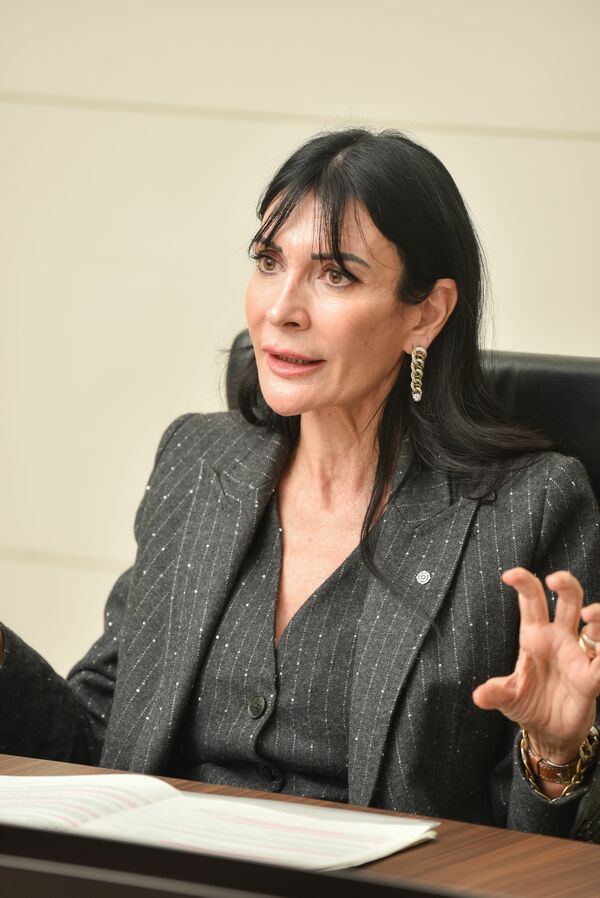
Lorena Dellagiovanna, Senior Vice President and Executive Officer and Chief Human Resources Officer (CHRO), echoed this message in outlining the talent strategy embedded in the new management plan.
“What we are trying to do is to reclaim the pioneer spirit—very much as an extension of the efforts of the past decade,” she said. “As Hitachi has grown through acquisitions, it has also tended to become more risk-averse.”
A Question Often Asked in Japan
The push to make risk-taking part of everyday behavior is now embedded directly in Hitachi’s management KPIs. From fiscal 2025, “growth mindset” has been rolled out companywide as a formal evaluation metric. Scores reflect not only how employees approach their own development, but also how effectively managers support that growth. The goal is clear: to push people to act on their own initiative—and to deliver.
“We ask employees to demonstrate whether they are truly the owners of their own careers—whether they are willing to take on challenges with ambition instead of avoiding risk, and whether they are able to manage those risks effectively,” Dellagiovanna explains.
Ensuring psychological safety is also essential to supporting initiatives on the front lines. Hitachi has been actively creating opportunities for dialogue between management and employees, including town hall meetings and roundtable discussions.
Dellagiovanna has also hosted online “Ask Me Anything” sessions. Employees from around the world raised a wide range of questions, such as “How can I move to another business?” and “How can I connect more with colleagues?” She noted that questions from Japan, in particular, often centered on a single concern: “How can I take risks?”
Hitachi is also looking at compensation as a way to encourage greater employee initiative. With more than 60% of its workforce now based overseas, the company is considering a system that adopts a more performance-based global standard while aligning with local needs and cost-of-living conditions.
Effective fiscal 2026, Hitachi will introduce a new compensation system, restricted stock units (RSUs), for management-level employees. To date, the scheme has been applied to approximately 80 people, including directors and executive officers. It will be expanded to approximately 1,500 individuals, including division heads and business unit heads, as well as presidents and officers of subsidiaries and affiliated companies.
RSUs are also used by major technology companies in the U.S. and Europe. At Hitachi, points known as “units” are awarded based on position. When certain conditions, such as years of service, are met, shares corresponding to those units are granted.
As global competition for digital talent intensifies, Hitachi believes that, while compensation varies by country, it is generally competitive in digital-related fields. Recently, the company has significantly increased compensation for both managerial and non-managerial employees in Japan.
Careers, the Hitachi Way
When employees ask whether Japan needs to move away from lifetime employment, Dellagiovanna responds that it is not about moving away, but about moving forward.
She cites “trust, commitment, loyalty, and stability” as key benefits of lifetime employment, adding: “What I advocate is a shift from lifetime employment to what I call ‘long-life employability’—the ability to remain employable throughout one’s working life.”
Because Hitachi operates across such a diverse set of businesses, she sees internal moves as opportunities for growth rather than disruption.
Her career reflects that approach. She has served as Country Manager in Italy and Finance Officer for Southern Europe, and now leads the company’s diversity and inclusion efforts.
“At Hitachi, I’ve been able to work on many different challenges. Given the diversity of the businesses and the different roles I’ve had, it has felt like working for several different companies.”
What, then, should Japanese companies look like as they seek to become truly global? Hitachi continues to test, adjust, and learn along the way.
This article is part of "Hitachi's Global Ambitions," a special feature originally published in Toyo Keizai from July to November 2025. English edition prepared for The Oriental Economist.