

Hitachi has been reshaping itself into a more globally profitable group. Today, around 60% of its revenue comes from overseas markets, and roughly 60% of its 280,000 employees are based outside Japan.
Over the past decade, the company has expanded through acquisitions, including ABB’s power grids business in Switzerland, US-based digital engineering firm GlobalLogic, and the railway signaling business of France’s Thales.
As the workforce becomes more diverse, new challenges have emerged—most notably, how to pass on Hitachi’s founding spirit and corporate DNA.
One initiative that helps convey what executives often call “Hitachi-ness” is the Hitachi Origin Park, located in Hitachi City, Ibaraki Prefecture, where the company was founded.
A growing destination for Hitachi’s global workforce
When I visited the Hitachi Origin Park in late October 2025, a group of visitors was taking photos as they looked out over the golf course, which lay in soft autumn light. They turned out to be participants in one of the site’s guided tours.
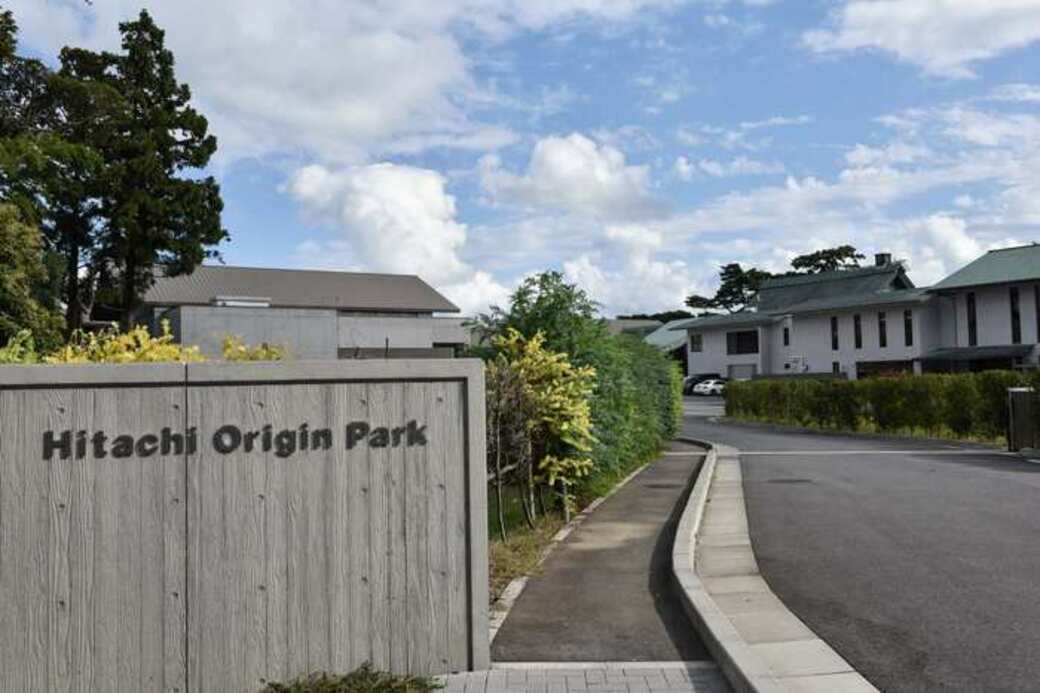
The Origin Park opened in November 2021. It brings together spaces that were once used as employee facilities, including the Ōmika Club and the Ōmika Golf Club.
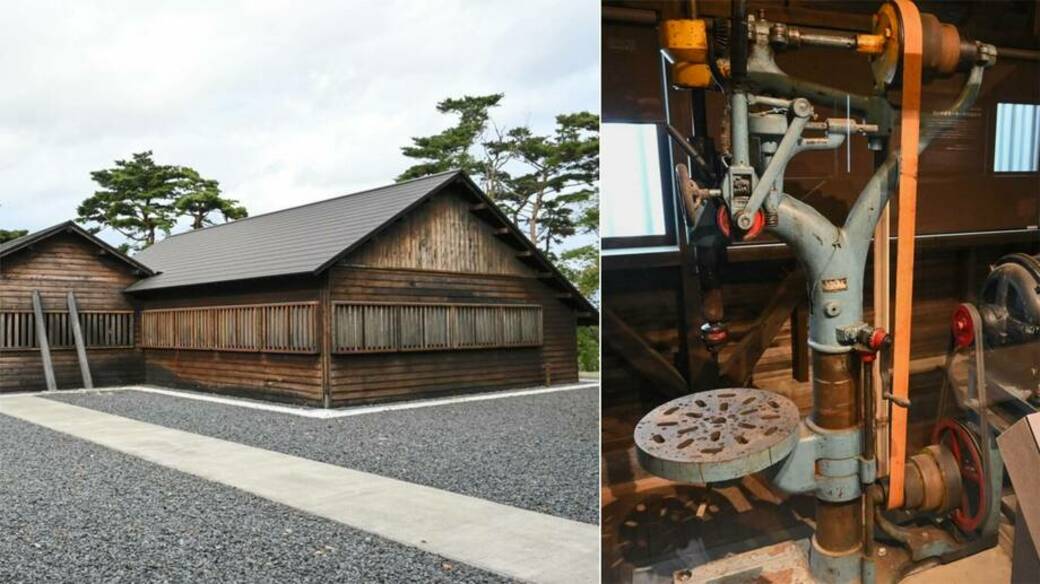
Alongside these are the Odaira Memorial Hall, which introduces Hitachi’s history and more recent initiatives, and a reconstructed “Founding Hut,” based on the repair workshop at the Hitachi mine where the company began.
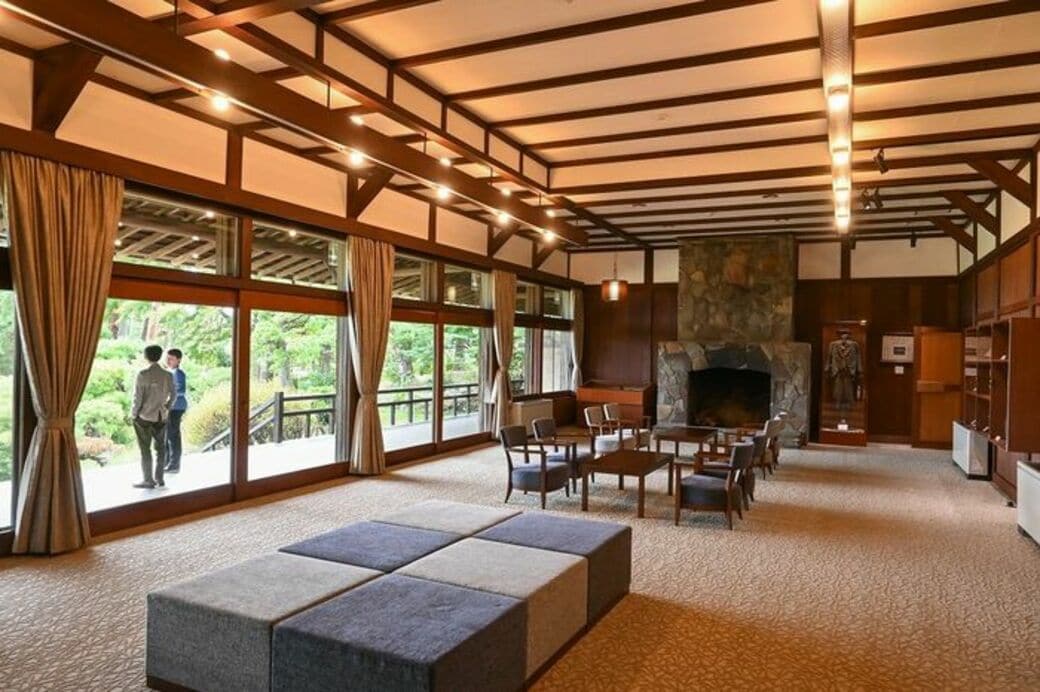
The site is open not only to Hitachi employees but also to the general public. In 2024, it attracted around 23,000 visitors. Employees accounted for roughly 27% of the total, with foreign employees making up about 4% of that figure.
The lobby of the classically styled Ōmika Club features personal artifacts from Hitachi’s early years, including a desk once used by founder Namihei Odaira, the company’s original articles of incorporation, and family photographs. Other photographs on display were taken by Odaira himself—and, as a photographer accompanying the visit observed, they were shot with “exceptionally good lenses, and real skill.”
As the tour got underway, I realised that the group I had noticed earlier was employees from Hitachi Rail, including several visiting from the UK.
The tour begins with a short film that introduces Odaira and explains how he established Hitachi, sketching his character and the circumstances surrounding him. During the visit, the English version was shown, and the tour was conducted entirely in English.
In one scene, the theatre is filled with images of falling rain. In another, Odaira is shown confiding his ambitions to an old friend, Motoji Shibusawa, during a train journey—played out in a dramatized sequence that draws viewers in. The participants watch the film intently.
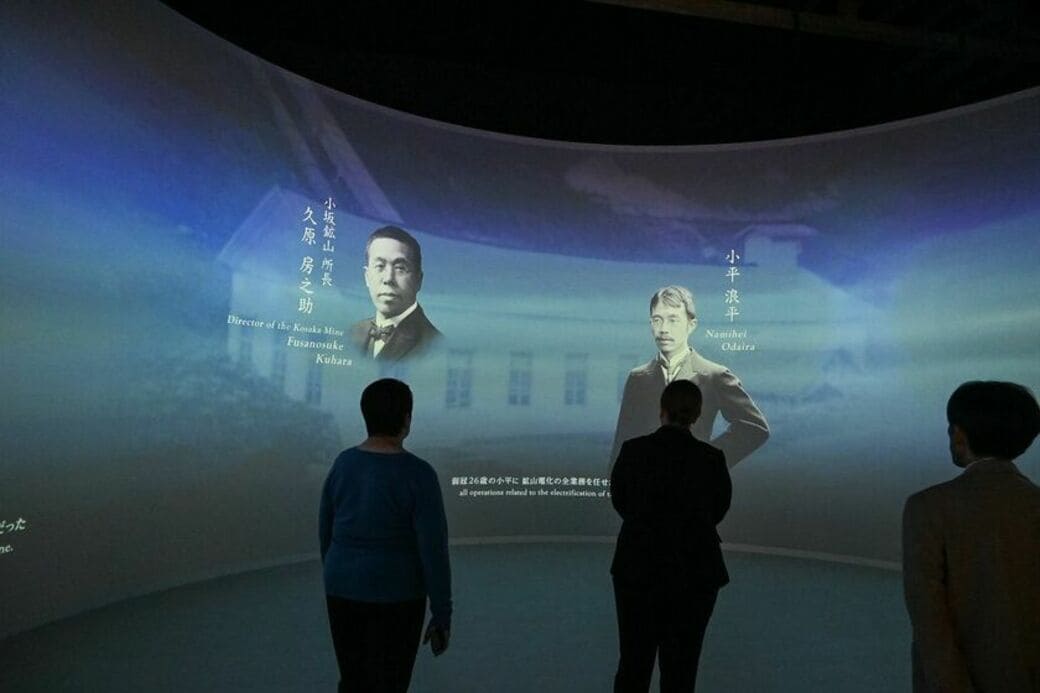
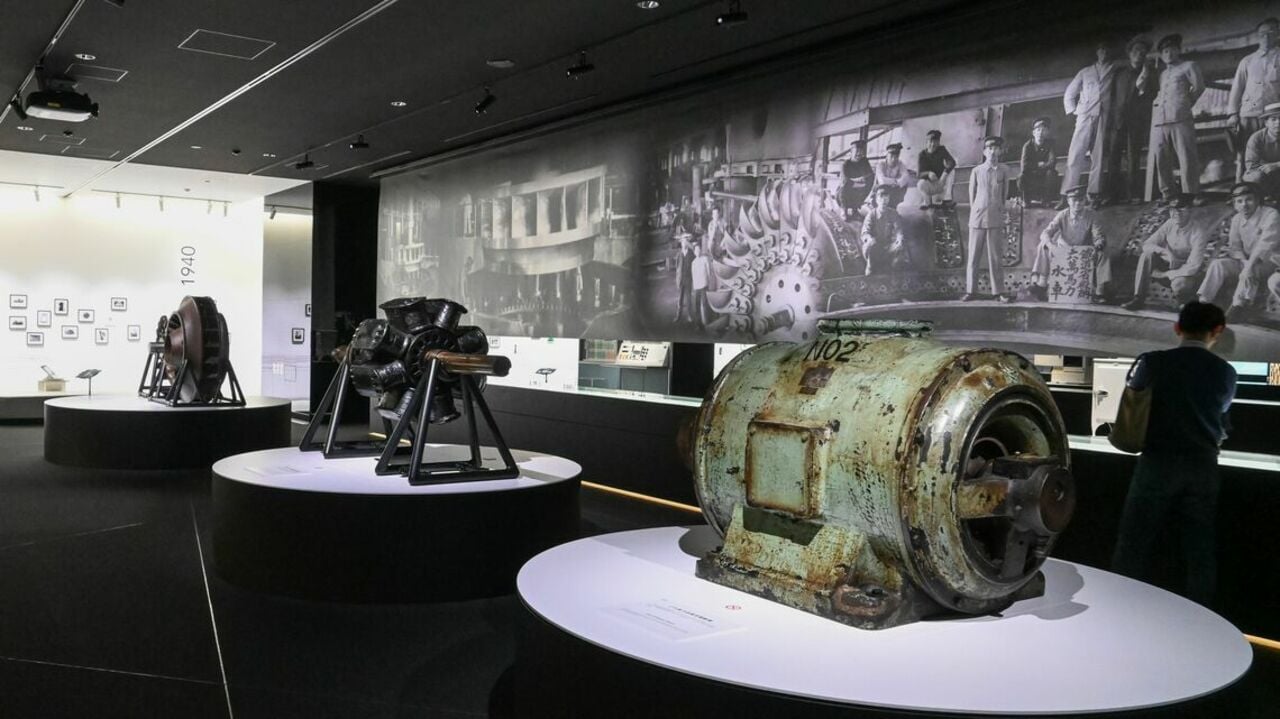
From there, the tour continues into a room filled with products and services Hitachi has developed over the years. On display are everything from a five-horsepower induction motor and transformers to analog computers, fans, washing machines, and biometric authentication devices, offering a sense of how Hitachi’s work has evolved alongside society since its founding in 1910.
As the exhibition reaches the railway section, the atmosphere lightens. “Finally—railways,” someone says, prompting smiles across the group. They chatted animatedly with colleagues, noting, “This is rolling stock used in the UK, isn’t it?”
They also reacted happily upon seeing household appliances such as fans, washing machines, and televisions. It was striking how enthusiastically they questioned the guide at nearly every exhibit.
The questions foreign visitors ask most often
After an introduction to Hitachi’s efforts to address social challenges, the tour heads to its final stop: the Founding Hut.
Inside, a five-horsepower motor manufactured in 1911 has been carefully preserved and remains operational. Videos recreating the period and original manufacturing equipment are also on display, inviting visitors to reflect on the company’s earliest days.
While the facility is intended to strengthen engagement among Hitachi employees, foreign executives who visit often respond in more personal terms. “I’d like my team to see this,” some say. Others talk about returning with their employees. At times, the opening film even draws spontaneous applause when it ends.
The level of engagement is high throughout. Questions frequently turn to the war years—how Japan rebuilt in the postwar period, or why the founder, Odaira, was purged from public office.
Curiosity extends further: why Hitachi did not remain a family business; whether there were patent disputes in its early days; why old drawings and signage are in English; and why the company’s name is derived from a place name. The question asked most often, however, is a simpler one: where the Hitachi logo comes from.
Executives from companies that have joined the group through mergers and acquisitions also visit the Origin Park. Yumi Numata, who oversees the site, describes it as an implicit part of the post-merger integration process.
“It’s not something that is formally defined,” she says, “but it feels like one element of PMI.” She adds that executives from companies with similar roots—particularly in infrastructure—often respond with strong empathy and affinity.
Hitachi upholds the corporate philosophy of “contributing to society through the development of superior proprietary technologies and products,” and the facility prominently highlights this message. The concept of social contribution — and the conviction behind it — is universal, resonating across nationalities.
“A purity of purpose”
“I really liked the opening film,” says one of the attendees, Jaclyn Jewell, Chief Compliance Officer of Hitachi Rail. “Seeing Odaira’s words projected on the screen, combined with the lighting, sound, and visuals, made it very immersive.” She adds that the railway exhibits stood out for her as well. “I have a real passion for materials and for manufacturing.”
Jewell joined Hitachi Rail three years ago and has since visited Japan several times, but this was her first trip to the Origin Park. Originally from South Africa, she has a varied professional background, including work at the United Nations on conflict-affected regions in Africa.
Now at Hitachi, she leads a truly global team, with members in Japan, India, and the UK. “We come from different cultures and different starting points,” she says, “but that diversity is our strength.”
At the same time, she emphasizes that safeguarding Hitachi’s values lies at the heart of her role in compliance. Asked what those values amount to in practice, she offers a clear answer.
“I think Hitachi has a real purity of purpose,” she says.
“There’s a focus on how we contribute to a more harmonious and sustainable society. How we make communities better, how we improve lives, how we care for the planet. Many companies start by asking how to increase profits. Hitachi begins by asking how its technology and innovation can improve people’s lives. For me, that’s the beauty of Hitachi.”
As the group continues to globalize, the question of how to share a common corporate philosophy becomes more pressing. At its birthplace, Hitachi has found a quiet way to address that challenge—by returning to where it began.
This article is part of "Hitachi's Global Ambitions," a special feature originally published in Toyo Keizai from July to November 2025. English edition prepared for The Oriental Economist.