

At the end of August 2025, an important working group was launched at Hitachi. About 40 people—mainly senior business leaders—were brought together from locations around the world.
Their mission was to lay the groundwork to roll out HMAX, Hitachi’s infrastructure maintenance and management solution, across the group’s businesses. HMAX, which was launched in November 2024, was jointly developed with Nvidia, a US semiconductor giant.
“Speed is critical in this kind of work,” says Jun Taniguchi, CEO of the Strategic SIB Business Unit, who leads the working group. “Members hold intensive discussions, quickly settle on a direction—“let’s go with this”—and move straight to implementation across the business units and sectors.”
HMAX, which is being rolled out rapidly with the involvement of some of Hitachi’s top talent, is expected to contribute to revenue growth in Lumada—the core of Hitachi’s digital strategy—and to play a key role in realizing a more unified “True One Hitachi.”
Built with Nvidia in just six months
HMAX began with an approach from Nvidia. When Toshiaki Tokunaga—then Executive Vice President in charge of Digital Systems & Services (DSS)—visited CEO Jensen Huang, the two companies signed an MOU that same day. Just six months later, HMAX was complete.
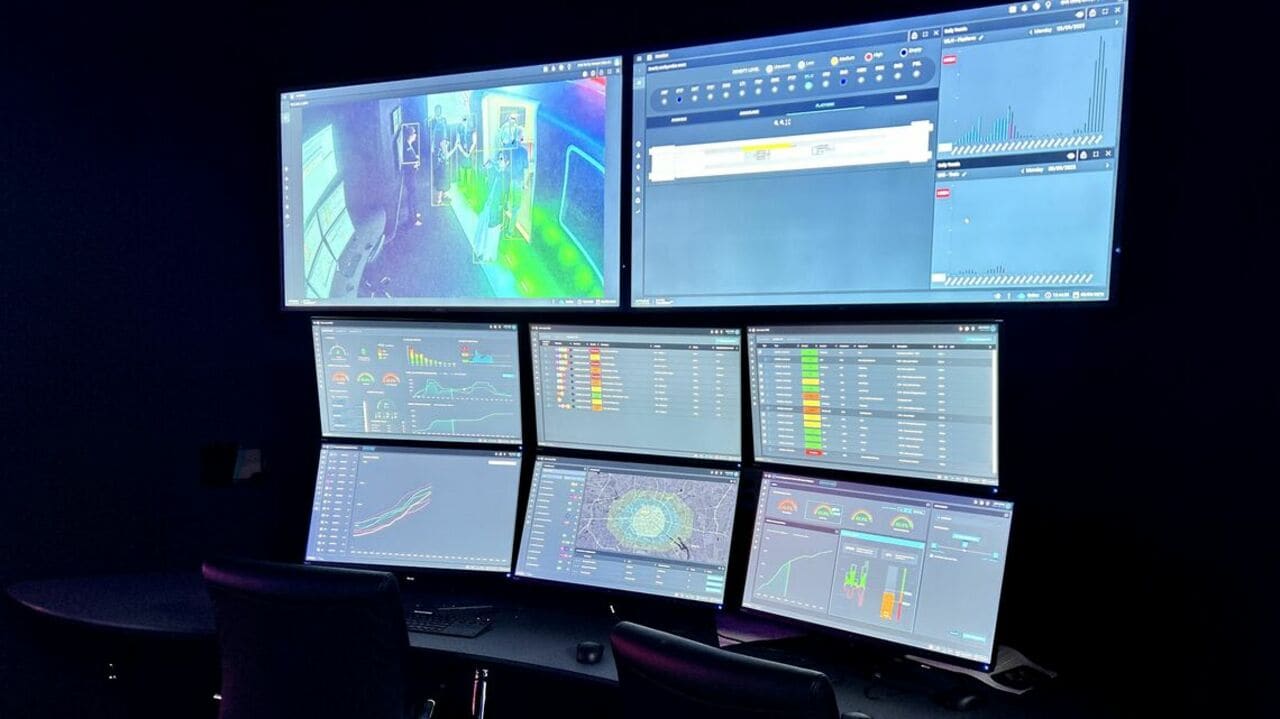
HMAX was initially developed for the railway sector. By leveraging Nvidia’s GPUs (graphics processing units), it became possible to analyze massive volumes of data—such as railway infrastructure data, including tracks—in a short period of time. This allows railway operators to carry out maintenance and repairs more efficiently based on fault prediction.
HMAX is highly profitable, Taniguchi says. As a software-based solution, it can also be deployed on installed bases from other vendors.
To push HMAX beyond its initial rollout, Hitachi established the working group mentioned earlier. The group’s discussions are organized around three core areas: customer delivery and market development, brand and communication strategy, and technology.
Decisions made by the working group are shared with the Chief Lumada Business Officers (CLBOs) across Hitachi’s 11 business units. Each unit then implements them, working closely with GlobalLogic, a Silicon Valley–based digital engineering firm that Hitachi acquired in 2021.
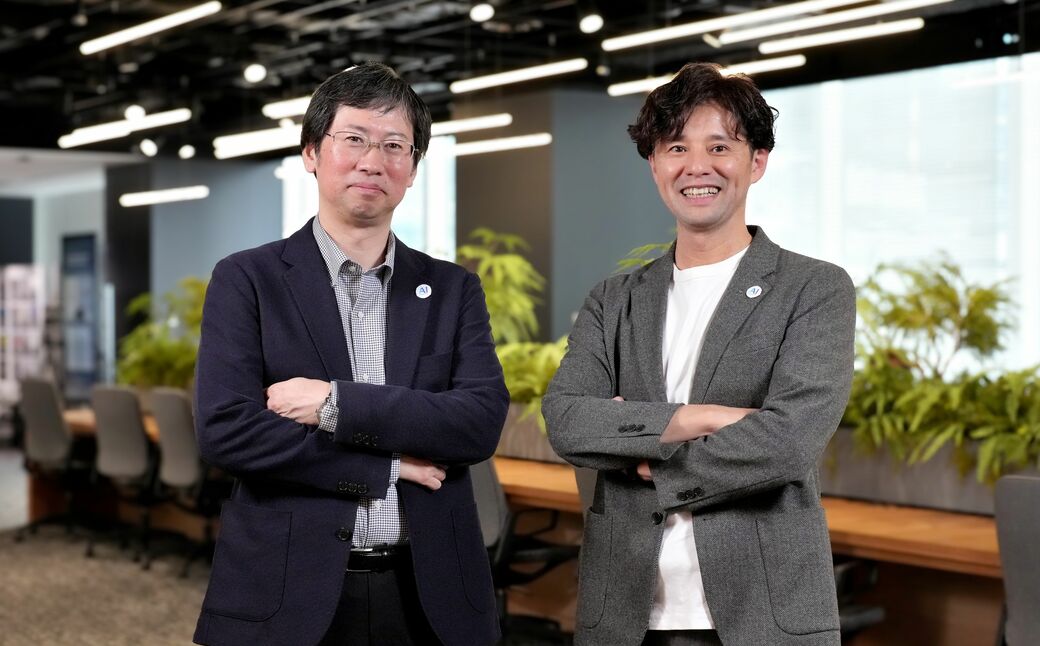
“A year ago, people inside the company were thinking about how to use AI. Now, thousands of employees are thinking about how to use HMAX,” says Jun Yoshida, Head of the Generative AI Center, who also participates in the working group.
With a long-term goal of increasing Lumada's share of group revenue to 80%, teams across Hitachi are increasingly focused on how to adopt Lumada and roll out HMAX.
“With the launch of HMAX, people have started paying attention—often for the first time—to what colleagues in other businesses are doing,” says Ryo Kurokawa, who is also a member of the working group.
“They started asking things like, ‘Can you tell us how HMAX is being used in the rail business?’ Teams in Building Systems and Power Solutions are also proactively learning about it on their own.”
Kurokawa adds, “This kind of mindset is actively encouraged across the company, and I feel that President Tokunaga is deliberately encouraging competition.”
Hitachi is now looking to take HMAX beyond infrastructure, expanding it into fields such as finance and government. As of September 2025, the solution had secured 50 orders, and the company expects the pipeline to grow to approximately 20,000 cases by fiscal 2030.
Tokunaga’s Vision Behind HMAX
Kurokawa recently prepared a presentation for an AI strategy briefing, when President Tokunaga offered a pointed comment.
On one slide, Kurokawa used an arrow to show how HMAX, which began in railways, could be extended to other businesses.
Tokunaga stopped him and said, “HMAX is about value creation emerging simultaneously from many different places. Some arrows may move sideways, others may leap upward.”
In many ways, that comment captures what HMAX is meant to be. While collaboration across businesses is encouraged, each unit is free to apply HMAX in its own way—spotting and creating new sources of value along the way.
In doing so, Hitachi aims to unlock what Tokunaga calls a “conglomerate premium”—the added value of operating multiple businesses as a single group.
According to Tokunaga, HMAX is already on track to reach several hundred billion yen in sales in fiscal 2025 and is growing at an exceptionally fast pace.
"Margins are running at no less than 20%. That’s not just my assessment—heads of each business unit are saying, ‘With HMAX, 20% is the floor,’" Tokunaga says. “It shows how firmly the HMAX model has taken hold, and how much it has raised expectations for Lumada.”
Amid these initiatives, some investors have questioned whether HMAX is truly becoming a unifying force across Hitachi. Tokunaga is unequivocal.
“Once HMAX is really put into practice across the company—and people start to see what it means to act as one—Hitachi can move up to the next stage.”
Lumada and HMAX continue to evolve—and even what they mean is still being redefined. That adaptability may well be their greatest strength.
This article is part of "Hitachi's Global Ambitions," a special feature originally published in Toyo Keizai from July to November 2025. English edition prepared for The Oriental Economist.