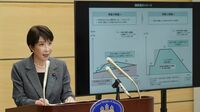


Of all the leaders of America’s allies, from Europe to Asia, no one has invested more in seeking the favor of Donald Trump than Japanese Prime Minister Takaichi Sanae. She has met Trump three times in person during her first year in office and offered up tens of billions in investment pledges, while keeping mostly quiet when Trump sanctioned the International Criminal Court and its Japanese head and embraced Chinese leader Xi Jinping’s unconcealed attempts to drive a wedge between Japan and the U.S.
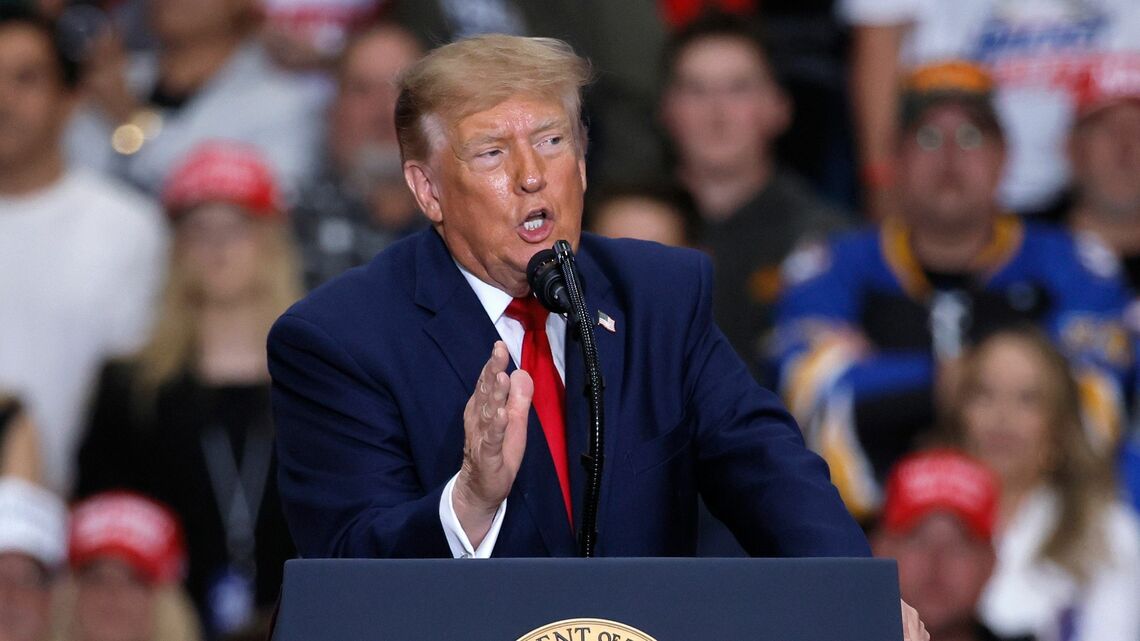
Now, if the latest polls are accurate, Trump and his MAGA movement face a potentially devastating political defeat in the midterm elections for the U.S. Congress on November 3. While the scale of defeat remains to be seen, there seems little doubt that Trump will emerge weakened and isolated, both within and outside the United States.
Did Prime Minister Takaichi make a bad bet by snuggling so close to the mercurial American leader?
“No, I don’t think that Takaichi has made a mistake,” eminent American Japan scholar Richard Samuels told Toyo Keizai Online. “From Japan’s perspective, hugging the US and hedging against its abandonment makes sense and seems to be working. She is smart to do this for as long as she can,” said Dr. Samuels, who is the director of the Japan program at MIT, the Massachusetts Institute of Technology.
Even if that is true – and most Japan hands in the U.S. share that view – it does not mean there are not huge risks for Japan that will be the result of the midterm vote. Much depends on what will be Trump’s state of mind if he suffers a serious political defeat.
One possibility, suggests a former senior State Department official, is that Trump will simply focus on cementing his legacy, mainly by building monuments to himself and continuing to enrich himself and his family through corruption, trade and investment deals with foreign powers, and pursuit of his enemies inside America.
“For a president with such a limited, highly personal conception of his role and opportunities, the prospect of spending his next two years in this way may well be quite attractive,” wrote former Economist editor Bill Emmott.
But it is also likely, some American analysts believe, that Trump will use his powers over foreign policy to engage in even more risky and provocative acts than he has already done. Trump’s brazen embrace in recent days of Russian leader Vladimir Putin may be a good indicator of what is to come.
These two alternative pathways are not mutually exclusive, former U.S. Ambassador to NATO Ivo Daalder told Toyo Keizai Online.
“There is definitely going to be legacy Don because that is who he is,” says Daalder, “but he will definitely also be unhinged.”
A weaker and more isolated Trump “will also become increasingly authoritarian and of the view that he and Xi (Jinping) and Putin should rule the world,” predicts the former senior official. Daalder believes that a trilateral summit with Putin and Xi on the sidelines of the November APEC summit in Shenzhen, proposed by the Russian leader, is highly likely. That summit could be focused on trying to impose a surrender on Ukraine on Russian terms, but Trump may just settle for the image of the three great leaders arm in arm.
“Trump needs to project power – and that increases the likelihood of him doing unhinged things,” says Daalder.
Escalation in the Iran war
The greatest challenge facing Trump after the elections – and maybe even before the vote – is how to get out of the quagmire of the Iran war. Trump is incapable of admitting making any mistake so his goal has been to find a way to declare victory and go home. But, says Daalder, the price of victory has gone up from some months ago when a deal with Teheran was at hand.
“Now it becomes more difficult,” argues the former U.S. envoy to NATO. Trump is likely to carry out a big military strike, presumably at the buried Iranian nuclear site at Pickaxe Mountain or the oil terminal on Kharg Island. “Trump may use a tactical nuclear weapon on either or both,” Daalder worries. Israeli Prime Minister Benjamin Netanyahu has openly called for a resumption of large-scale attacks, aimed at toppling the Iranian regime, after the U.S. election.
Escalation against Iran will trigger a widening retaliation against the Gulf states, further undermining global oil and gas markets and disrupting supply chains for chemicals and fertilizers. For Japan, this is a serious threat to economic growth plans, but Trump may not care about the broad economic crisis this could trigger.
After declaring ‘victory,’ Trump can then focus on the Western hemisphere, with an attempt to seize power in Cuba high on his list of targets, the former envoy to NATO predicts. “Even Greenland is not over,” he believes.
Another nightmare for Japan – a summit with Kim Jong Un
Another nightmare for Japan after a midterm defeat may be the increased prospect of a Trump summit with North Korea’s Kim Jong Un. Recent remarks by Trump seemed to dampen the prospects of a meeting and Kim has little incentive to meet with him, most North Korea watchers believe. Recognition of North Korea’s nuclear status is no longer sufficient reason to hold a meeting.
“Trump has nothing he wants, other than the U.S. leaving South Korea,” a former senior State Department official told this writer. It is possible, the official says, that the Chinese and Russians may urge Trump in Shenzhen to seek a meeting with Kim to declare an end to the Korean war and begin to remove U.S. forces from South Korea. “If I were Kim, I would get Putin to carry his water on this and declare it a victory for peace,” the former official speculates. “I can see Trump falling for that.”
China bargain
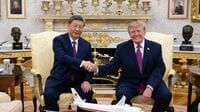
Takaichi and senior Japanese officials are already alarmed by the prospect for a ‘grand bargain’ between Trump and the Chinese leader that could leave Japan effectively isolated. That bullet was mostly dodged when Xi visited Washington but the two leaders are planning to meet twice after the midterm elections – at the APEC summit in Shenzhen and then at a G20 summit held at a Trump golf resort in Florida.
As is increasingly clear, Trump’s anti-Chinese posture is mostly a performance for his voter base. Steps to engage in a full-scale trade war, and to seriously restrict the flow of high technology to China, have largely been abandoned. U.S. defenses in the Western Pacific have been drawn down, even before the Iran war. Post the elections, there may be little to stop Trump from seeking to cement an axis with China.
“Trump is also a little scared of President Xi and wants his approval,” Phillips O’Brien, a prolific analyst and professor of strategy at Britain’s St Andrews University, wrote recently. “In the end, Trump would be happy to see the Chinese dominate East Asia, especially if he can profit from it.”
Can Congress stop Trump?
Japanese officials may hope that a weakened Trump will face greater resistance after the election from the Congress, not only from victorious Democrats but also Republicans who see him as a political liability heading toward the 2028 presidential election. But some observers argue that Trump will simply go deeper down the road of political retaliation and dismissal of Congressional authority.
“We can expect extreme policies, ignoring of Congressional subpoenas, and rejection or dismissal of court orders as he adopts a highly confrontational approach to governing during his remaining time in office,” former senior State Department official Evans Revere told Toyo Keizai. “He may feel he has nothing to lose, especially since the Supreme Court has given him blanket immunity for his actions as President.”
What can Japan do?
In this post-midterm world, faced with an increasingly risky Trump presidency, what will Prime Minister Takaichi do?
“Japanese are far better off strengthening relations with Korea, with Australia, and with the Europeans,” argues Daalder, embracing the call of Canadian Prime Minister Mark Carney for middle powers to unite in the face of an unreliable U.S. Simply hoping that Americans will return to their leadership role and listen to allies is not enough.
But, he admits, “Japanese are trapped by their dependency, and so are many of the Europeans.” And in the case of Takaichi, the psychology of subordination to Washington is deeply embedded.
“By fawning all over Trump, Takaichi thinks she has him on her side,” Columbia University Emeritus scholar Gerald Curtis told Toyo Keizai Online. “But Trump only respects one thing and that is power. He is reassured she has no power. So he takes her for granted.”
Japan will not be alone in this dependency trap – Europeans are also hoping to keep the alliance alive. The difference, Curtis observes, is that “the Europeans have each other. The Japanese have nobody. Without the United States, Japan is stuck.”